|
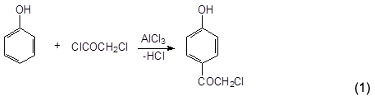
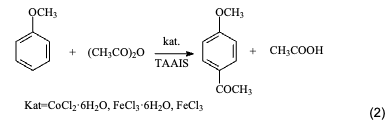
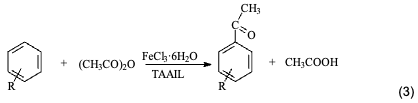
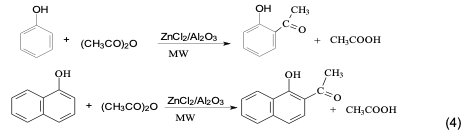
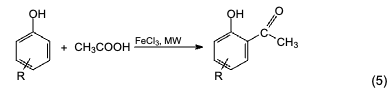
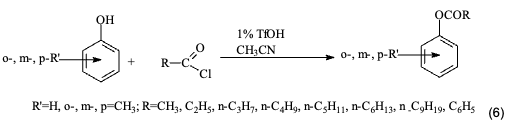
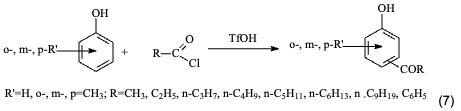
Introduction At present, the preparation of derivatives of 2-chloropropionyl chloride is one of the new important directions in organic chemistry. 2-Chloropropionyl chloride is an acylating agent, and the compounds it forms with phenol open the way for the synthesis of highly active organic compounds. It is known that in Friedel–Crafts acylation reactions of aromatic hydrocarbons using chloroacetyl chloride as the acylating agent, solvents such as carbon disulfide, nitromethane, and others are usually employed in the presence of aluminum chloride as a catalyst. Under these reaction conditions, benzene, toluene, naphthalene, c-hydrindacene, fluorene, and fluorenones readily undergo condensation reactions with chloroacetyl chloride [1]. The acylation reaction of anisole with acetic anhydride has been carried out in the presence of CoCl₂·6H₂O, FeCl₃·6H₂O, and FeCl₃ catalysts. In the reaction, 1 mol of anisole was reacted with 1.3 mol of acetic anhydride, and 10% catalyst relative to the reagents was used. In addition, 0.5 g of a catalyst prepared from arylalkyl ionic liquids containing various palladate counterions and iron(III) chloride hexahydrate (TAAIL) was employed. The reaction was conducted at 60°C for 24 hours (equation 2) [5]. Previously, when anhydrous Lewis acids were used in this reaction, the yield was low. When aqueous catalysts such as CoCl₂·6H₂O, FeCl₃·6H₂O, and FeCl₃ were used as catalysts, the acylation reaction showed regioselective influence, yielding predominantly the para-isomer. In particular, compared to FeCl₃, the use of FeCl₃·6H₂O resulted in a higher proportion of the para-isomer. In the Friedel–Crafts acylation reaction carried out with 1 mmol of benzene derivatives, 2 equivalents of acetic anhydride, 0.5 g of TAAIL, and 10 mol% FeCl₃·6H₂O catalyst at 60°C, 5% of the ortho-isomer was obtained (equation 3). where R = H, 4 hours, 65%; R = 4-Me, 4 hours, 72%; R = 2,4,6-Me, 4 hours, 83%; R = 2,4,6-OMe, 4 hours, 84%; R = 2,3,5,6-Me, 72 hours, 94%; R = 2,3,5,6-Me, 4 hours, 85% yields were obtained. When compounds containing various substituents on the phenolic ring were subjected to reaction with acetic acid under similar conditions, it was also established that the ortho-isomer relative to the hydroxyl group was formed (equation 5). where R = 2,3-benzo; 3,4-benzo; m-CH₃, p-CH₃, m-OH, p-OH, m-NO₂, o,p-(CH₃)₂. All reactions were conducted under solvent-free conditions. The authors conducted the reaction of phenol and o-, m-, and p-cresols with 1% TfOH–CH₃CN at room temperature for one hour, successfully obtaining O-acylated products. The researchers also carried out reactions of phenol, o-cresol, m-cresol, and p-cresol in the presence of concentrated TfOH catalyst, with equimolar amounts of reagents at room temperature, achieving the formation of C-acylated products. The reaction proceeded as follows (equation 7): In this reaction, the acyl group in phenol and o-cresol predominantly attached at the para-position relative to the hydroxyl group, in p-cresol at the ortho-position, and in m-cresol both ortho and para to the hydroxyl group. The relative reactivity of phenol and cresols in the C-acylation reaction was found to be as follows:
The chloracetylation reactions of the monomethyl ether of hydroquinone with Lewis acids were found to produce both O- and C-chloracetylated products (equation 8). Favorable reaction conditions were determined.
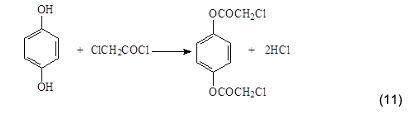
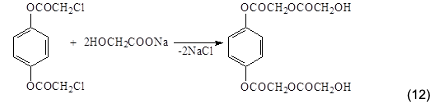
Experiments showed that when these reactions were conducted without catalysts, but in the presence of solvents, the O-chloracetylated products were obtained in high yields. From the experiments, it was established that these reactions proceed very slowly, over periods of up to 24 hours [8-9]. When thymol was chloracetylated in an organic solvent medium without a catalyst, the reaction proceeded regioselectively to form the corresponding esters (equation 9). In particular, when the chloracetylation of thymol was carried out in chloroform, only O-chloracetylation occurred, yielding chloracetylthymol in 95% yield [10]. During the reaction of thymol with chloroacetyl chloride, the electron density in the chloroacetyl chloride molecule shifts toward the electronegative oxygen atom, resulting in the oxygen acquiring a partial negative charge. Due to the influence of the electronegative chlorine and oxygen atoms, the carbon atom acquires a partial positive charge, which interacts with the lone electron pairs of the hydroxyl group in the thymol molecule, allowing the process to proceed further. One of the most important and widespread types of reactions in organic chemistry is nucleophilic substitution reactions occurring at a saturated carbon atom. It should be noted that the nucleophilic substitution reaction is frequently used in the synthesis of substances. In the science of organic chemistry, nucleophilic substitution reactions at saturated carbon atoms have played a crucial role in the emergence and development of fundamental concepts regarding reaction mechanisms. It is well known that dipolar aprotic solvents (such as DMSO, DMF, TGF, acetone, dioxane) facilitate bimolecular nucleophilic substitution reactions of alkyl halides by solvating the cation in the salt of the carboxylic acid. The reaction of O-chloroacetyl thymol with the disodium salt of oxalic acid in dimethylformamide was proposed to proceed according to the following scheme (equation 10): In order to study the acylation reactions of phenols and their derivatives in greater depth, chloracetylation reactions of dihydric phenols were performed. Since the isomers of dihydroxybenzene possess multiple reactive centers, the reactions were carried out under various conditions [11-12]. When chloroform was used as the solvent, it was established that only the O-chloracetylation product was formed. When hydroquinone was heated with chloroacetyl chloride in chloroform for 16 hours, bis-1,4-O-chlora-cetylhydroquinone was obtained. The reaction proceeds according to the following equation (11) [13]: When the reaction of sodium glycolate with bis-1,4-O-chloracetylhydroquinone was con-ducted in DMF under 1:1:3 molar ratios, the process lasted 5 hours and yielded the product in 76% yield. It was found that further prolongation of the reaction time and variation in the molar ratio of the reagents did not affect the yield of the product. Therefore, these reaction conditions can be considered optimal. The reaction equation (12) is as follows: In this context, the reaction equation and mechanism of para-methoxyphenyl chloro-acetate with sodium glycolate in dimethyl-formamide were also studied. The solvation of sodium cations in DMF facilitates the entry of the НОСН₂СОО- ion into the organic phase and promotes the reaction. The researchers developed a mechanism for the formation of the products of these reactions. From this mechanism, it was determined that dimethylformamide solvates the sodium cation of glycolate, thereby enhancing the reactivity of the glycolate anion [12]. Hydroquinone possesses properties that regulate plant growth. When the chlorine atom attached to the carbon atom adjacent to the ketone group is substituted by another nucleophilic group, its negative effect on plant organisms may be reduced. For this purpose, reactions of dichloroacetyl-hydroquinone with the sodium salts of phenol, p-methoxyphenol, p-chlorophenol, and β-naphthol were carried out. Based on these studies, the following reactivity series of the nucleophilic reagents was established [14]: p-methoxyphenol < phenol < β-naphthol < p-chlorophenol. Literature sources have studied the reactions of phenols and isomeric cresols with chloroacetyl chloride [15-16]. However, the chloracetylation reaction of phenol with 2-chloropropionyl chloride has not been in-vestigated. The novelty of this study lies in conducting the chloracetylation reaction of phenol with 2-chloropropionyl chloride to synthesize phenyl-2-chloropropionate. This study aims to synthesize phenyl-2-chloro-propionate through the reaction of phenol with 2-chloropropionyl chloride, and to utilize it as a basis for obtaining novel organic compounds.
Methods and Materials All chemicals and reagents used in this study were of analytical grade purity. Phenol (94.11 g/mol, 99.1%), 2-chloropropionyl chloride (126.97 g/mol, 97%), absolute benzene (78.11 g/mol, 99%), sodium (22.98 g/mol, 97%), calcium chloride (319.85 g/mol, 95%), acetone (58.079 g/mol, 98%), and deionized water (DW) were used for so-lution preparation and washing procedures.
Synthesis of Phenyl-2-chloropropionate in Benzene Solution In all experiments, equimolar quantities of reagents were used. The reaction time was determined by the cessation of hydrogen chloride evolution. Experiment No. 1. Into a round-bottom flask equipped with a reflux condenser, 4.7 g (0.05 mol) of phenol, 6.35 g (0.05 mol) of 2-chloropropionyl chloride, and 30 mL of absolute benzene were added and heated for 10 hours. A hydrogen chloride outlet tube was attached to the upper part of the reaction flask, and the evolved HCl gas was absorbed in water to form hydrochloric acid. The evolution of hydrogen chloride was periodically monitored using litmus paper. To separate unreacted phenol, the reaction product was washed with 10% aqueous alkali and extracted into the benzene layer. The organic layer was then dried over CaCl₂. Benzene was removed from the reaction mixture under ambient conditions, and the remaining product was distilled under reduced pressure using a simple distillation apparatus (110–112°C / 10 mm Hg). The yield of phenyl-2-chloropropionate was 3.8 g (42%). Experiment No. 2. The reaction of 4.7 g (0.05 mol) of phenol with 6.35 g (0.05 mol) of 2-chloropropionyl chloride in 30 ml of absolute benzene was carried out over 12 hours. The yield of phenyl-2-chloropropionate was 5 g (54%). Experiment No. 3. The reaction of 4.7 g (0.05 mol) of phenol with 6.35 g (0.05 mol) of 2-chloropropionyl chloride in 30 ml of absolute benzene was carried out over 15 hours. The yield of phenyl-2-chloropropionate was 5.9 g (64%).
Preparation of Phenyl-2-chloropropionatefrom Sodium Phenolate and 2-Chloropropionyl Chloride in Benzene Solution Experiment No. 1. In a round-bottom flask equipped with a reflux condenser, 4.7 g (0.05 mol) of phenol was placed and dissolved in absolute benzene. Cleaned sodium metal (free from oxide film) was gradually added to the solution. To form sodium phenolate, the reaction mixture was further heated for 2 hours. Next, 6.35 g (0.05 mol) of 2-chloropropionyl chloride was added, and the mixture was heated for 4 hours. As a result of the reaction, a white precipitate of sodium chloride formed, and its quantity began to increase. The reaction product was washed with 10% aqueous alkali and extracted into benzene solution. It was then dried over CaCl₂. Benzene was removed from the reaction mixture under ambient conditions, and the remaining product was distilled under vacuum (110–112°C / 10 mm Hg) using a simple distil-lation apparatus. The yield of phenyl-2-chloropropionate was 4.7 g (51%). Experiment No. 2. In absolute benzene solution, 4.7 g (0.05 mol) of phenol was reacted with 1.15 g (0.05 mol) of sodium to synthesize sodium phenolate. To this, 6.35 g (0.05 mol) of 2-chloropropionyl chloride was added, and the reaction was conducted over 5 hours. The yield of phenyl-2-chloropropionate was 5.3 g (58%). Experiment No. 3. In absolute benzene solution, 4.7 g (0.05 mol) of phenol was reacted with 1.15 g (0.05 mol) of sodium to synthesize sodium phenolate. To this, 6.35 g (0.05 mol) of 2-chloropropionyl chloride was added, and the reaction was conducted over 6 hours. The yield of phenyl-2-chloropropionate was 6.6 g (72%).
Synthesis of Phenyl-2-chloropropionate in Acetone Solution Experiment No. 1. In a round-bottom flask fitted with a reflux condenser, 4.7 g (0.05 mol) of phenol, 6.35 g (0.05 mol) of 2-chloropropionyl chloride, and 25 ml of acetone were added and heated for 7 hours. A hydrogen chloride outlet tube was attached to the upper part of the reaction flask. The evolution of hydrogen chloride was periodically monitored using litmus paper. After the reaction, acetone was first removed under ambient conditions. The reaction product was then washed with 10% aqueous alkali, extracted into benzene, and dried over CaCl₂. Benzene was removed under ambient conditions, and the remaining product was distilled under vacuum (110–112°C / 10 mm Hg) using a simple distillation apparatus. The yield of phenyl-2-chloropropionate was 4.1 g (45%). Experiment No. 2. In an appropriately equipped reaction apparatus, 4.7 g (0.05 mol) of phenol, 6.35 g (0.05 mol) of 2-chloropropionyl chloride, and 25 ml of acetone were added and heated for 9 hours. When the evolution of hydrogen chloride ceased, the process was stopped. After the acetone was removed, the reaction product was washed with water and extracted into benzene. The yield of phenyl-2-chloropro-pionate was 4.8 g (53%). Experiment No. 3. In an appropriately equipped reaction apparatus, 4.7 g (0.05 mol) of phenol, 6.35 g (0.05 mol) of 2-chloropropionyl chloride, and 25 ml of acetone were added and heated for 12 hours. When the evolution of hydrogen chloride ceased, the process was stopped. After the acetone was removed, the reaction product was washed with water and extracted into benzene. The yield of phenyl-2-chloro-propionate was 5.7 g (62%). Since this study was specifically focused on the synthesis of phenyl-2-chloropropionate, the reactions were not carried out at a single fixed temperature and time. Instead, the processes were conducted at the boiling temperatures of the respective solvents. The reaction time was determined and monitored using the Beilstein test. For this reason, the influence of variations in these parameters on product yield was not discussed in the manuscript. To separate the main product, phenyl-2-chloropropionate, from possible impurities, washing with alkaline water followed by vacuum distillation was applied.
Characterization of Phenyl-2-chloropropionate Obtained Under Various Conditions by IR, ¹H NMR, and ¹³C NMR Spectroscopy IR spectra were recorded on a Bruker INVENIO X spectrometer in accordance with ASTM E573. ¹H NMR spectra were recorded in CDCl₃ on a Unity+400 (Varian) instrument operating at 400 MHz. HMDS was used as an internal standard in the ¹H NMR spectra. In the ¹³C NMR spectra, the chemical shift of the solvent was used as the internal standard. Gas chromatography–mass spectrometry (GC-MS) was carried out using a GC 8890 GC module coupled with a 5977 MSD detector (Agilent, USA). A 5HP-MS capillary column with polar stationary phase (30 m × 0.25 mm × 0.3 µm) was used under the following conditions: Injector temper-ature: 280°C, Carrier gas: H₂, 1 ml/min, Thermostat program: Initial 60°C (hold 1 min), ramp 10°C/min to 180°C, then 6°C/min to 230°C (hold 5 min), Detector temperature: 250°C, Ionization by electron impact at 70 eV; MS recording started after 4 minutes (time corresponding to the solvent peak), m/z range: 10–500. To identify the composition of the product formed by the reaction of phenol with 2-chloropropionyl chloride, thin-layer chromatography (TLC) was performed. In a hexane–ethyl acetate system at a 6:2 volume ratio on Silufol UV-254 plates, a single spot with Rf = 0.42 was observed. This compound was identified as phenyl-2-chloro-propionate.
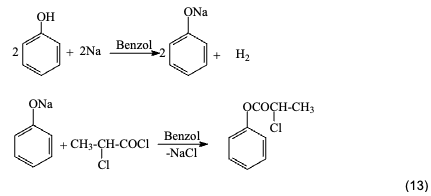
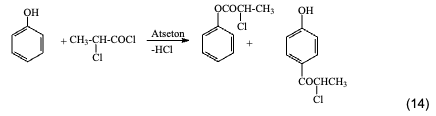
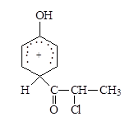
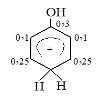
Results and Discussion The synthesized phenyl-2-chloropropionate is a colorless liquid with a pleasant odor. Its boiling point is 110–112°C at 10 mm Hg. In a hexane–ethyl acetate system at a 6:2 volume ratio on Silifol UV-254, it shows an Rf value of 0.42. The refractive index nD20 was determined to be 1.5012. The electrical conductivity was measured at 1.383 (unit). The reaction of phenol with 2-chloro-propionyl chloride was conducted under various conditions. Initially, sodium metal was gradually added to phenol dissolved in absolute benzene. After sodium phenolate had formed, 2-chloropropionyl chloride was added gradually. During the reaction, the sodium phenolate salt dissolved, and the reaction was completed. The reaction scheme (equation 13) can be depicted as follows: To investigate how the reaction between phenol and 2-chloropropionyl chloride proceeds in aprotic solvents and what products are formed, reactions were carried out in acetone solution. The product obtained from the reaction was analyzed. When an aqueous solution of FeCl₃ was added to the product, a violet coloration characteristic of the hydroxyl group was observed. Analysis of the product by thin-layer chromatography (TLC) revealed the presence of two spots. The reaction thus proceeds via O-acylation to form phenyl-2-chloropropionate, and theoretically via C-acylation to form 4-hydroxyphenyl-2-chloropropionate (equation 14). When acetone was used as the solvent, the C-acylated compound 4-hydroxyphenyl-2-chloropropionate was formed, and the reaction product yield was also higher. This can be explained by the formation of a relatively bulky and stable (I) complex under the reaction conditions, which promotes the formation of 4-hydroxyphenyl-2-chloro-propionate (Figure 1):
The absence of acyl group substitution at the ortho position in the phenol chloracetylation reaction can be explained as follows: 1) Because 2-chloropropionyl chloride is bulky, steric hindrance prevents the reaction at the ortho position. 2) The chloropropionyl cation (electrophile) formed in the complex with 2-chloro-propionyl chloride is unstable due to mesomeric effects, resulting in high selectivity (equation 15): Therefore, the most favorable and stable para-isomer is formed in the reaction.
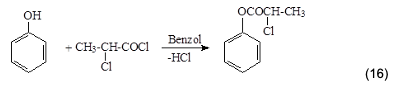
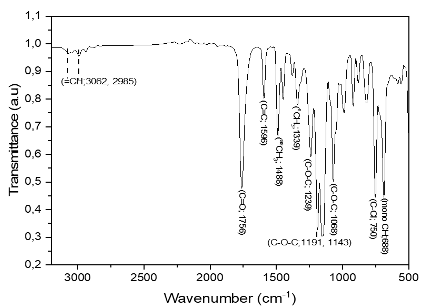
The selectivity of the acyl group and the directing influence of I-type substituents in the aromatic ring toward the para position are known from the literature [18-19]. The reaction of phenol with 2-chloro-pro-pionyl chloride was carried out under various conditions in benzene and acetone solutions. When phenol was reacted with 2-chloropropionyl chloride in benzene solution, the reaction proceeded as follows (equation 16): To determine the composition of the chloropropionylation product of phenol with 2-chloropropionyl chloride, thin-layer chromatography (TLC) was conducted. In a hexane–ethyl acetate system (6:2 by vol-ume) on Silifol UV-254, the product displayed a single spot with an Rf value of 0.42. The reaction product was subjected to physicochemical analysis. From IR, ¹H NMR, ¹³C NMR, and gas chromatography–mass spectrometry, the structure of phenyl-2-chloropropionate was confirmed. In the analysis of the IR, ¹H NMR, ¹³C NMR, and chromatographic mass spectra of phenyl-2-chloropropionate, literature sources were consulted [20–23]. The infrared (IR) spectrum of phenyl-2-chloropropionate was recorded in the range of 4000–400 cm⁻¹ using the ATR (Attenuated Total Reflectance) method. The main absorption bands identified in the spectrum confirm the presence of functional groups in the compound. A strong absorption band observed at 1756 cm⁻¹ corresponds to the stretching vibration of the carbonyl (C=O) group in the ester moiety, indicating that the substance is in the ester form. The band at 1596 cm⁻¹ corresponds to the stretching vibration of C=C bonds in the aromatic ring. The bands at 1068, 1143, 1191, and 1239 cm⁻¹ are attributable to C–O–C stretching vibrations, further confirming the presence of ester functional groups. The absorptions at 2985 cm⁻¹ and 3062 cm⁻¹ are interpreted as stretching vibrations of =C–H bonds in the aromatic ring. The signal at 688 cm⁻¹ corresponds to the deformation vibration of C–H bonds in a mono-substituted benzene ring. The absorption at 1488 cm⁻¹ is related to the asymmetric deformation vibration of a methyl (–CH₃) group. The absorption observed at 750 cm⁻¹ corresponds to the C–Cl stretching vibration, confirming the presence of chlorine atoms in the compound. Furthermore, the absence of a broad absorption band in the 3200–3600 cm⁻¹ region, which is characteristic of hydroxyl (O–H) groups, indicates that the compound has transitioned from an acidic to an ester form (Figure 3). Overall, the obtained IR spectrum fully corresponds to the proposed structure of phenyl-2-chloropropionate.
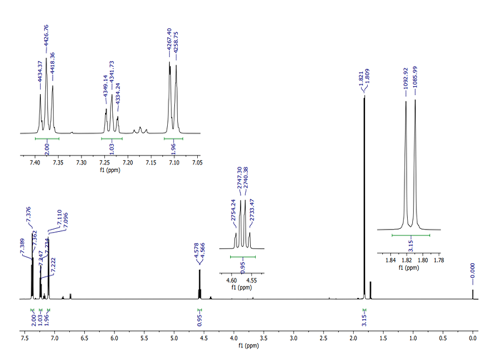
The ¹H NMR spectrum of phenyl-2-chloropropionate was recorded in CDCl₃ solution at 600 MHz using a Unity+600 (Varian) spectrometer (Figure 4).
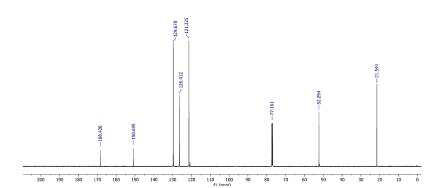
The following proton signals were identified in the obtained spectrum: A singlet at 1.75 ppm corresponding to the protons of the –CH₃ (methyl) group. Another singlet at 4.50 ppm corresponding to the protons of the CH₂ group adjacent to the carbonyl (C=O) group and chlorine atom. The relatively high chemical shift value of this signal is due to the influence of the electronegative atoms (Cl and C=O). A set of multiplet signals in the range of 7.05–7.40 ppm, characteristic of aromatic ring protons, confirming the presence of the phenyl ring. All observed signals and chemical shift values in the ¹H NMR spectrum fully match the proposed structure of phenyl-2-chloropropionate. In particular, the presence and order of individual signals for CH₃, CH₂, and aromatic protons serve as reliable confirmation of the compound’s structure. The ¹³C NMR spectrum of phenyl-2-chloro-propionate is shown in Figure 5.
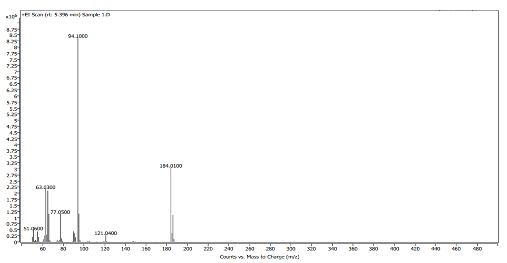
The ¹³C NMR spectrum of phenyl-2-chloro-propionate showed ten characteristic peaks corresponding to the carbon atoms. The singlet peaks at 21.54, 52.29, 121.32, 126.41, 129.67, 150.69, and 168.42 ppm are attributed to carbons of the phenyl-2-chloropropionate molecule, confirming its structure. The singlet at 77.16 ppm corresponds to the chloroform solvent. Upon injection of phenyl-2-chloropro-pionate into the GC–MS instrument under the specified conditions, a molecular ion with m/z = 184 was detected at a retention time of 5.396 minutes.
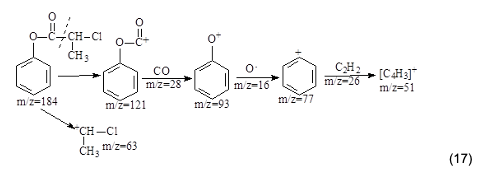
As shown in Figure 6, the fragmentation pattern of the molecular ion of phenyl-2- From the molecular ion of phenyl-2-chloropropionate, an ethyl chloride cation with m/z = 63 is released in the first fragmentation pathway. In the second pathway, a phenoxycarbonyl cation with m/z = 121 is produced. From this fragment cation, carbon monoxide elimination results in the formation of a phenoxy cation with m/z = 93. In the next stage, elimination of an oxygen radical from the m/z = 93 ion produces an m/z = 77 fragment. Finally, elimination of an acetylene molecule yields the fragment cation with m/z = 51, completing the fragmentation process. The formation of fragment ions from phenyl-2-chloro-propionate was observed as shown in equation 17.
Conclusion For the first time, we conducted the reaction of phenol with 2-chloropropionyl chloride and synthesized phenyl-2-chloropropionate, which opened a new direction in the chlor-acetylation reactions of aromatic hydro-carbons. During the experiments, equimolar amounts of phenol and 2-chloropropionyl chloride were used. The reactions were carried out both by directly reacting phenol with 2-chloropropionyl chloride in benzene solution and by first preparing sodium phenolate. In the direct reaction conducted in benzene solution by heating for 10–15 hours, the product yields ranged from 42% to 64%. When sodium phenolate was prepared in benzene and then reacted, the yield significantly increased, reaching up to 72%. Reactions conducted in acetone as solvent under heating for 7–12 hours resulted in yields of about 45–62%. The experimental results showed that when benzene and acetone were used as solvents, benzene facilitated the reaction more efficiently. Infrared (IR) spectral analyses confirmed the presence of the ester group in the phenyl-2-chloropropionate molecule (strong C=O absorption at 1756 cm⁻¹), as well as signals characteristic of the aromatic ring and C–Cl bond. In the ¹H Nuclear Magnetic Resonance (NMR) spectrum, the following were identified: a singlet corresponding to the methyl group (1.75 ppm), a singlet corresponding to the CH₂ protons located near the chlorine and carbonyl groups (4.50 ppm), and multiplets corresponding to the aromatic ring protons (7.05–7.40 ppm). In the ¹³C NMR spectrum, ten signals corresponding to the carbon atoms were detected, confirming the compound’s structure. GC–MS analysis revealed a molecular ion (m/z=184) and sequential fragmentation pathways, resulting in fragment ions at m/z=121, 94, 77, 63, and 51. The studies determined that reactions con-ducted in acetone also produced the C-acylated compound, 4-hydroxyphenyl-2-chloropropionate. This C-acylation reaction was explained by the formation of a moderately bulky and stable complex. Additionally, the absence of acylation at the ortho position was attributed to the large size of the 2-chloropropionyl chloride and steric hindrance. The –OH group in the phenol nucleus directing acylation to the para position corresponds to the selectivity reported in the literature.
Acknowledgments We express our gratitude to the Faculty of Chemistry, Mirzo Ulugbek National University of Uzbekistan and Almalyk State Technical Institute for their support in conducting this work.
Funding Sources This research did not receive any specific grant from funding agencies in the public, commercial, or not-for-profit sectors.
References
|
||||||||||||||||||||||||||||||