|
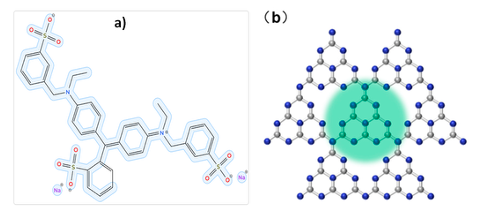
Introduction Chemical pollutants play a major role in the accumulation of toxins in aquatic ecosystems and bio-magnify up the food chain, ultimately affecting higher-level con-sumers [1]. A significant portion of the population relies on these water sources for drinking, sanitation, and recreational activities. Moreover, contaminated waterways can interfere with ecosystems, harm aquatic organisms, and diminish both environmental quality and the aesthetic value of urban areas [2,3]. The detection of chemical residues in wastewater is a growing global issue, primarily driven by human waste, inadequate disposal methods, and discharges from production facilities. These residues can often survive wastewater treatment procedures, resulting in the pollution of both surface and groundwater as well as soil, which presents serious threats to ecological systems and human health [4,5]. The presence of these chemical contaminants and dyes in water sources, even in low concentrations, poses a significant risk to human health and ecosystems. It may lead to severe mutagenic, genotoxic, and other ecotoxicological consequences for humans, animals, and plants [6,7]. Brilliant Blue (BB) is an anionic synthetic dye characterized by its vibrant, bright blue color. It is widely used across various industries, including food products, beverages, pharmaceuticals, and cosmetics. Also known as Brilliant Blue FCF, this dye features a triphenylmethane structure with the chemical composition: N-ethyl-N-(4-[(4-ethyl[(3-sulfophenyl)methyl]-amino]phenyl)(2 sulfophenyl)methylene]-2,5-cyclohexadien-1-ylidene)-3-sulfobenzene-methanaminium hydroxide inner salt, disodium salt, as shown in Figure 1(a) [8].
Brilliant Blue, a widely used textile dye, persists as a non-degradable contaminant in aquatic environments. Its pronounced toxicity, vivid pigmentation, and resistance to standard treatment methods make it particularly hazardous to aquatic organisms, presenting significant ecological risks. To address this challenge, nanotechnology—particularly the use of quantum dots (QDs)—has shown considerable promise as an innovative approach to environmental remediation [9,10]. To remove these organic dyes and eliminate their toxicity, several traditional treatment methods have been developed, including electrochemical, co-agulation, ultrafiltration, photocatalysis, adsorption, and co-precipitation [11,12]. However, these techniques must be continually developed and refined to reduce operating costs [13,14]. Due to its cost-effectiveness, ease of operation, and high efficiency, the adsorption technique has become a widely adopted method for water purification [15,16]. Adsorption is a chemical and physical phenomenon that occurs as a result of forces present on the surface of a liquid or solid. Materials adhere to the surface due to these forces; as a result of a decrease in the system's free energy and entropy, adsorption occurs, a spontaneous process. Graphitic carbon nitride (g-C3N4), as shown in Figure 1(b), is a two-dimensional semiconductor polymer composed entirely of carbon and nitrogen, two of the most abundant elements on Earth, which together account for approximately 99% of the Earth's crust [17,18]. Graphitic carbon nitride (g-C3N4) exhibits exceptional physical and chemical properties, including robust chemical and thermal stability, cost-effectiveness, scalability, and environmental compatibility. These distinctive character-istics position g-C3N4 as a crucial material for addressing global environmental chal-lenges through diverse applications, such as photocatalytic degradation of persistent dyes, pharmaceuticals, and pollutants; solar-driven hydrogen production; CO2 reduction; nitrogen fixation; antimicrobial treatments; and advanced sensor technologies [19-21]. Nonetheless, pure g-C3N4 exhibits certain drawbacks, including limited visible-light response, a small surface area, and a low electron-hole separation rate. These negative aspects greatly diminish photocatalytic effectiveness [22,23]. The removal of dyes from aqueous solutions by adsorption is among the most effective techniques available. Consequently, adsorption methodologies facilitate the extraction of pigments from concentrated industrial effluents. Nevertheless, regenerating a significant proportion of adsorbents poses considerable challenges. Furthermore, the financial expenditure associated with adsorption processes utilizing such materials is substantial. In contemporary research, nanotechnology has emerged as one of the most noteworthy advancements for the effective removal of dyes from wastewater through adsorption. This technology demonstrates efficacy in treating water contaminated with trace amounts of organic and inorganic dyes and is more cost-effective than alternative methods. Recently, nanoparticles and nanocomposites have been identified as the most effective agents for both adsorption and photo-catalytic processes aimed at the complete removal of dyes from wastewater [24-27]. G-C3N4 is an organic semiconductor material with advantageous properties, including non-toxicity, reliability in terms of chemical resistance, and affordability [28]. In this study, a nanomaterial based on graphitic carbon nitride (g-C3N4) was synthesized from melamine, a precursor rich in carbon and nitrogen. The structural and morphological characteristics of the prepared nanomaterial were examined using XRD, SEM, FTIR, and EDX to elucidate its crystalline structure and surface morphology. The adsorption efficiency of g-C3N4 was subsequently evaluated for the removal of selected dye pollutants commonly found in wastewater, such as Brilliant Blue. By measuring the absorbance of the treated sample and calculating the corresponding removal percentages, the overall performance of g-C3N4 as an effective adsorbent for eliminating dyes contaminants from polluted water was assessed.
Materials and Methods Melamine: chemical formula (C3H6N6) with molecular weight 126 g/mole and its purity 99.8%, production company (Zhejiang Polymer Chemical Co., Ltd . ); Brilliant Blue dye: chemical formula (C37H34N2Na2O9S3) with molecular weight 792.85 g/mole and its purity 85%; ethanol: chemical formula (C2H5OH) with molecular weight 46.07 g/mole and its purity 70% production company (JOUDTOL); distilled water. Preparation of g-C3N4 One method for producing g-C3N4 powder involved the direct thermal treatment of nitrogen-rich organic precursors, such as melamine. Melamine was heated to 500°C for 4 hours in a muffle furnace within a covered alumina crucible [29]. Then, the material was pulverized using a mortar and pestle. By applying this treatment, we have synthesized g-C3N4. Then, g-C3N4 was washed by ethanol to get rid of impurities. The purity of the synthesized g-C3N4 was confirmed through XRD, SEM, FTIR, and EDX measurements for use in this study as a nanosurface in the adsorption process. Adsorption Study A stock solution of Brilliant Blue dye was prepared at a concentration of 50 mg/L, and from this, different concentrations (1 , 2, 3, 4, and 5) mg/L were prepared in order to study the effect of concentration on the ad-sorption process of the BB dye. Then the effect of temperature for the same concen-trations was also studied at (15, 20, and 40)°C, as well as the effect of surface mass (g-C3N4) for weights (0.025, 0.05, 0.075, 0.1) g at 25°C, after studying each effect, the prepared solutions were first and second separated using a centrifuge, and then the absorbance of the solutions was measured at the wavelength of the Brilliant Blue dye (560 nm). The removal percentage and adsorption capacity were calculated for equations 1 & 2: where C˳ (mg/L) is the initial concentration of BB dye solution, Ce (mg/L) is the concentration of BB dye solution at equilibrium; where Qₑ is the adsorption capacity at equilibrium (mg/g), Ce is the initial con-centration of solution (mg/L), Ce is the con-centration of solution at equilibrium (mg/L), V is the volume of solution (L or ml) , and W is the mass of adsorbent (g).
Results and Discussion FESEM/EDX Scanning electron microscopy (SEM) was employed to examine the surface morphology and microstructural features of the synthesized g-C3N4. As shown in Figure 2(a) and (b), the material exhibits a well-defined rod-like nanostructure with relatively uniform geometry.
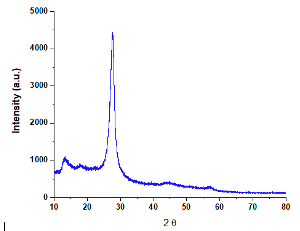
The observed rods possess characteristic dimensions on the order of ~1.33 µm in length and ~50 µm in diameter, while the rod width is approximately 5 µm, indicating a highly anisotropic nanostructure. Notably, the surface of the g-C3N4 rods exhibits abundant nanoscale pores, cracks, and structural defects, contributing to a hier-archically porous architecture. These surface irregularities significantly increase the effective surface area and expose numerous accessible active sites [30,31]. The coexistence of mesopores and macropores, as evident in Figure 2(a) and (b), is particularly advantageous for adsorption-based wastewater treatment, as it minimizes mass-transfer resistance and facilitates rapid diffusion of organic pollutants and dye molecules from the aqueous phase to the internal adsorption sites. Overall, the rod-like morphology, combined with the porous surface texture, enhances adsorption efficiency by promoting pollutant accessibility, accelerating transport kinetics, and improving the interaction between contaminants and the reactive surface of g-C3N4. This microstructural design is therefore highly favorable for applications in wastewater remediation and adsorption-driven purification processes [32,33]. EDX is a method for recognizing elements within a sample. Various shapes like squares, lines, and small areas (dots) can be analyzed using EDX. It serves as a vital research tool to enhance the efficiency of manufacturing processes. The EDX analysis (Figure 2c) confirmed that the produced g-C3N4 consists of Carbon (C) and Nitrogen (N) [34,35]. X-Ray Diffraction (XRD) The crystalline structure of the synthesized g-C3N4 was investigated using X-ray dif-fracttion (XRD), and the resulting diffraction pattern is presented in Figure 3.
The diffractogram exhibits a dominant sharp diffraction peak centered at approximately 2θ ≈ 27.4°, which is characteristic of the (002) crystallographic plane of graphitic carbon nitride. This peak corresponds to the interlayer stacking of conjugated aromatic layers, reflecting the periodic arrangement of tri-s-triazine (heptazine) units along the c-axis [36,37]. A weaker and broader diffraction feature observed in the low-angle region around 2θ ≈ 13.0° can be attributed to the (100) in-plane structural packing of the heptazine units. The broad nature of this peak indicates limited long-range order within the in-plane framework, which is typical of polymeric g-C3N4 materials synthesized via thermal polycondensation. The pronounced intensity and sharpness of the (002) peak suggest a relatively high degree of interlayer ordering, while the overall peak broadening reflects the nano-scale dimensions and partial structural disorder of the material. The absence of additional diffraction peaks confirms the phase purity of the synthesized g-C3N4, with no detectable crystalline impurities or secondary phases.The reduced crystallinity combined with nanoscale structural disorder is advantageous for adsorption and photo-catalytic applications, as it introduces defect sites and enhances surface reactivity. These structural features are consistent with the SEM observations and enhance mass transport and active-site availability during pollutant adsorption or catalytic processes [38,39].
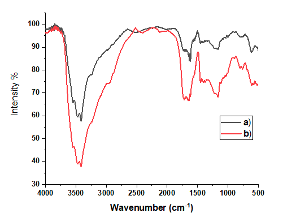
Fourier Transform Infrared (FTIR) Analyzing the FTIR spectra allows for a clear understanding of functional group linkages. Figure 4(a) shows the Fourier transform infrared (FTIR) spectra of g-C3N4, and Figure 4(b) also shows the Fourier transform infrared (FTIR) spectra of g-C3N4 after the adsorption of the Brilliant Blue dye.
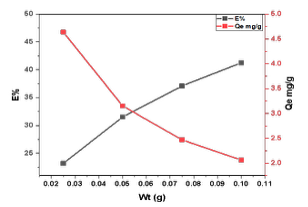
Significant changes appeared in the Fourier transform infrared spectrum of the com-pound after the adsorption of Brilliant Blue dye. A slight shift in the N-H expansion band was observed, from 3090 cm⁻¹ to 3080-3045 cm⁻¹ [40,41]. This suggests pos-sible interactions between the amine groups of the g-C3N4 surface and the sulfonate or aromatic groups of the dye molecules. Furthermore, more intense C=N, C-N bands were observed in the region between 1400-1600 cm⁻¹, possibly due to ԯ - ԯ stacking interactions between the aromatic rings of Brilliant Blue and the conjugated heptazine units of g-C3N4. Additional new peaks appeared at 1483, 1458, 1433, 1330, 1244, and 1209 cm⁻¹ after adsorption. Overall, the appearance of new functional group vibrations, intensity changes, and spectral shifts indicates successful adsorption Brilliant Adsorbent Dosage One of the most important factors affecting the adsorption process is the weight of the adsorbent. Different amounts of g-C3N4 (0.025-0.1 g) on the adsorption of a dye (5 mg/L dye solution at pH 7), while keeping all other parameters constant, the solutions were shaken for 60 min at 25°C. Figure 5 shows that the amount of adsorbent material is directly related to the percentage removal, with higher pollutant uptake observed as the adsorbent dose increases.
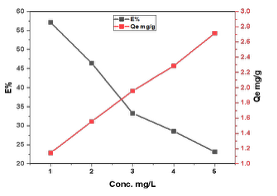
A higher adsorbent dose increases the number of active exchangeable sites on its surface, thereby facilitating ion capture. Furthermore, lower doses of adsorbents accelerate the adsorption rate due to the greater abundance of accessible active sites. Conversely, when a high adsorbent dose is used, dye ions may be unable to reach the adsorption sites until equilibrium is established. In general, increasing the adsorbent dose can reduce the total solute adsorp-tion per unit mass of adsorbent due to interactions among the adsorbent's active sites.[1,38,43]. Effect of Concentration Figure 6 shows solutions prepared at different concentrations (1-5) mg/L under the same conditions of weight (0.05 g) and temperature (25°C), where the adsorption capacity increases with increasing concentration and, therefore, the percentage of removal decreases with increasing concentration.
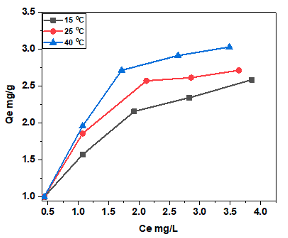
The dye molecules become more saturated with the adsorbent or surfaces, competing for the limited active sites, thus reducing the ability of the adsorbent or process to remove a greater percentage of the dye. The removal of dyes through sorption is closely related to their starting concentration [44,45]. This relationship is associated with the number of available active sites on the adsorbent and the concentration of dye molecules. In general, the initial dye concentration in water plays a crucial role as a driving force, facilitating mass transfer from the bulk solution to the adsorbent surface. Consequently, as the initial dye concentration increases, the driving forces also become stronger. Thus, in solutions with a high concentration of dye, the molecules encounter greater difficulty in locating binding sites on the adsorbent's surface. Effect of Temperature g-C3N4 was employed as a nanomaterial adsorbent for the treatment of contaminated dyes, specifically Brilliant Blue, under various temperature conditions (15, 25, and 40) °C and different concentrations of 1-5 mg/L of BB dye, as shown in Figure 7. The most effective adsorption was observed at 40°C.
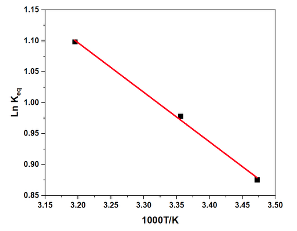
This is because raising the temperature provides the energy required for dye molecules to adhere to the g-C3N4adsorbent surface. It is well known that physical adsorption is an endothermic process; as temperature rises, adsorption efficiency increases, leading to a higher removal percentage. Consequently, increasing the temperature increases the adsorption rate because the dye molecules have higher kinetic energy. This results in higher diffusion and adsorption rates, facilitating the establishment of equilibrium between the adsorbent, g-C3N4 , and the adsorbate, Brilliant Blue dye. Moreover, higher temperatures yielded optimal conditions for physical adsorption [48-50]. Thermodynamic Parameters Thermodynamic analysis was performed to evaluate the feasibility and spontaneity of the sorption process. Key thermodynamic parameters, including the Gibbs free energy change (ΔG°), enthalpy change (ΔH°), and entropy change (ΔS°), were determined using the Van’t Hoff approach [51]. The values of ΔH° and ΔS° were obtained from the slope and intercept of the linear plot of ln Kd versus 1/T (Figure 8), respectively, according to equation 3:
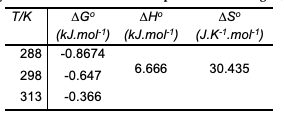
The thermodynamic parameters associated with adsorption from solutions offer significant insights into the nature and mechanism of the adsorption process. The standard Gibbs free energy change ΔG is computed as follows (equation 4): A negative Gibbs free energy indicates the viability and spontaneity of the adsorption process [52]. The thermodynamic factors presented in Table 1 provide essential insight into the nature of BB dye adsorption onto g-C3N4. The positive ΔH values confirm that the adsorption process is endothermic, consistent with the observed decrease in Qmax as temperature increases. Moreover, the magnitude of ΔH 6.666 kJ mol-1) is well below 40 kJ mol-1, indicating that the adsorption is dominated by physisorption, where reversible intermolecular forces govern the interaction between the dye molecules and the adsorbent surface [53,54].
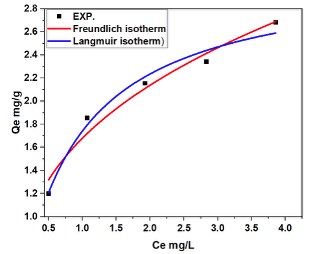
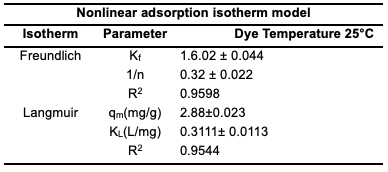
From the values of Free Gibbs Energy (ΔG°) in Table 1 for all temperatures (15, 25, 40) °C are negative (-0.867, -0.647, and -0.366) kJ/mol. Respectively, this means the adsorption process is spontaneous through this range of temperature [55]. A positive value of entropy ΔS° (30.435)kJ/K mol indicates increased randomness in (solid-liquid) adsorption systems due to structural changes in the surface of the adsorbent material during the process [49,56,57]. Adsorption isotherm To assess the distribution of the adsorbate from the liquid phase to the solid phase until equilibrium is reached under controlled (constant) conditions, it is essential to utilize an instrument for studying adsorption isotherms [58,59]. In this research, the Langmuir and the Freundlich models were utilized to assess the adsorption properties. The Langmuir isotherm postulates that adsorption occurs in a monolayer on a surface with a limited number of uniform sites and that there is no interaction among the adsorbed molecules. It can be represented as (equation 5): where qe refers to the quantity of adsorbate that is adsorbed at equilibrium (mg /g), qmax signifies the maximum adsorption capacity achievable when monolayer coverage is complete (mg/g), Ce indicates the equilibrium concentration of the adsorbate present in solution (mg/L), and KL represents the Langmuir equilibrium constant, which is associated with the affinity for binding sites (L /mg) [3,60]. An empirical model that characterizes adsorption onto heterogeneous surfaces with a non-uniform distribution of adsorption heat is the Freundlich isotherm. Its equation is as follows (equation 6): The qe is the amount of adsorbate adsorbed at equilibrium (mg/g), KF is the Freundlich constant that indicates the adsorption capacity (mgl-1/n g-1L1/n), Ce is the equilibrium concentration of the adsorbate in solution (mg/L), and n is the hetero-geneity factor (dimensionless), with values of 1 < n < 10 indicating favorable adsorption [61,62]. The results in Table 2 indicate that the adsorption process occurred on a heter-ogeneous surface and may involve multi-layer adsorption. The Freundlich model provides the best fit to the data (R² = 0.9598), indicating that the surface is heterogeneous and that adsorption occurs at sites with different energies. However, the Langmuir model also yielded good results (R² = 0.9544), as the difference between the two models is minimal.
Figure 9 shows that the adsorption of Brilliant Blue dye best follows the Freundlich model. This indicates a heterogeneous distribution of adsorption sites on the adsorbent surface, as the increase in adsorption efficiency (Qe) with increasing equilibrium concentration (Ce) reflects g-C3N4's efficiency in removing the dye at high concentrations [63,64].
Conclusion The synthesized adsorbent exhibited an efficient adsorption performance toward the target pollutant, which can be attributed to its porous structure and the availability of abundant active sites that facilitate mass transfer and surface interactions. Adsorption experiments demonstrated that initial concentration, temperature, and adsorbent dose significantly influence the adsorption behavior, confirming the dominant role of electrostatic interactions and mediated effects. Thermodynamic analysis revealed negative ΔG° values, indicating that the adsorption process is spontaneous, while the positive ΔH° value confirmed its endothermic nature. The positive ΔS° fur-ther suggested increased randomness at the solid–solution interface during adsorption. Overall, the results confirm that the ad-sorption process is feasible and energetically favorable. These findings highlight the potential of the prepared material as an effective adsorbent for wastewater treatment and provide a useful basis for future optimization and practical applications. Based on the R2 value (0.9598), the data follows the Freundlich model. The adsorption behavior indicated that both surface chemistry and environmental conditions play critical roles in controlling removal efficiency.
References
|
||||||||||||||||||||||||||||||||||||||||